Apex Orchestration $497
You Collect AI Tools. It's Time to Orchestrate Them.
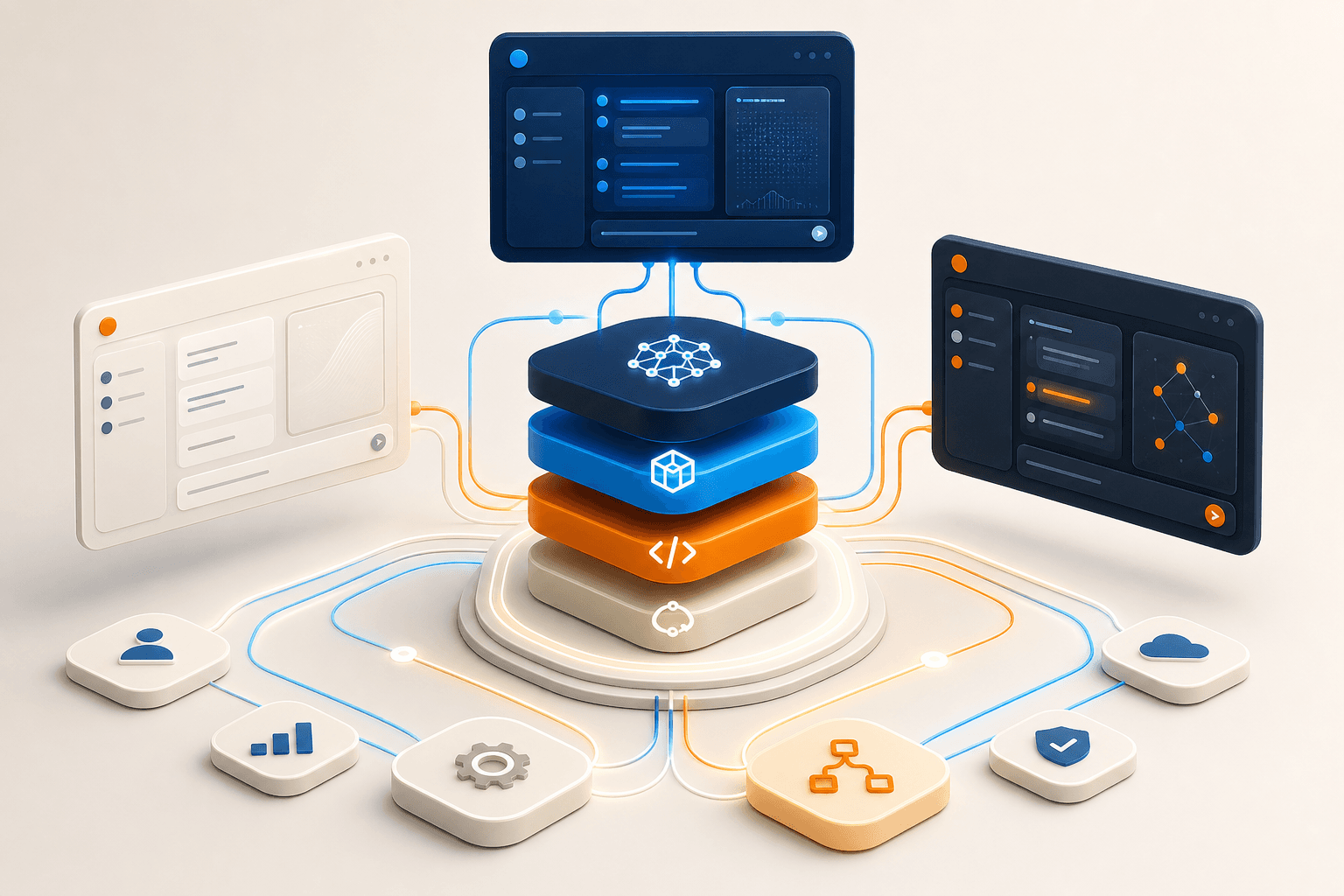
Apex Orchestration is the full system: running Claude, Copilot, and ChatGPT as one coordinated operation across the four layers of AI work: thinking, producing, building, connecting.
The Reframe
For the Person Who Knows They're Underusing What They Pay For.
You already use AI. You pay for more than one tool. And you have the nagging sense you are barely scratching the surface, jumping between tools at random with no system tying it together.
You are not a developer, you are a conductor. You route work to the right tool and direct it. You do not write code. You decide what gets done and which tool does it.
Orchestration is the one skill that does not rot. Tools get repriced, replaced, and deprecated. A skill tied to one tool dies with that tool. Orchestration sits above the tools.
Built by an operator.
Craig Frazier, Apex AI Founder & CEO
25 years in enterprise IT — Dell Technologies, Capital One, Deloitte. Hyper-converged infrastructure builds. Compute, network, and storage architectures supporting Fortune 100 mission-critical workloads. A career spent designing systems where the cost of getting it wrong is measured in seven figures. The same engineering rigor that produces production-grade infrastructure now applied to multi-agent AI systems. This isn't a course written by someone who recently discovered AI. It's a course written by someone who has spent a quarter century building the systems Fortune 100 companies actually run on.
A tool stack without orchestration is an annual tax.
Apex Orchestration is anchored against $1,200 a year in disconnected tool spend by teaching the one skill that survives vendor churn: routing work across the right systems.
The course turns scattered subscriptions into one operating model across thinking, producing, building, and connecting.
Outcomes
What Changes After This Course.
Run all three ecosystems as one coordinated system instead of three tools in isolation
Operate across all four layers of AI work: thinking, producing, building, connecting
Direct the build layer fluently without writing code, because you are conducting, not coding
Walk out with a real cross-platform workflow you built yourself and keep running
Stop collecting tools and start operating a system that compounds every time you use it
Curriculum
What's Inside.
Ten modules across the full system — every layer, every ecosystem, working together. You learn where each AI ecosystem (Claude, Copilot, ChatGPT) actually wins, how to route work between them, and how to build a cross-vendor system that survives any single tool getting deprecated or repriced. The signature deliverable is a working cross-platform workflow you build, deploy, and keep.
The ten modules:
By Module 10 you have a working cross-platform workflow running in your real environment. The 14-agent multi-vendor system actually running Apex AI is documented in Module 8 as a working case study — you're not learning what could work, you're learning the system already running.
Implementation Material
Four Implementation Tracks. Most Courses at Any Investment Don't Ship This.
Apex Orchestration includes four dense, audience-specific implementation supplements: one each for the IT Professional, the Solopreneur, the Business Operator, and the Automation Builder.
Most courses at any investment level do not ship this volume of audience-specific material. It is the clearest proof of how deep this goes.
Implementation Tracks
For the IT professional, network admin, or technical lead whose job is to make AI work for the rest of the organization. Focused on the architectural decisions, security considerations, and integration patterns that matter when you're deploying multi-agent AI across a real company. Includes the reference architecture for the multi-agent system running Apex AI, anonymized for your use.
For the solopreneur, consultant, or one-person business owner whose job is everything. Focused on the orchestration patterns that let one person operate at the scale of a small team - agent assignment, workflow distribution, and the specific multi-tool moves that compound when you're the only operator. Includes the daily-operating-cadence playbook used to run Apex AI as a one-operator business.
For the COO, GM, or business unit leader whose job is operating a team through systems, not directing it through meetings. Focused on the orchestration patterns that translate to team-level deployment - where AI handles the work that doesn't need human judgment, freeing humans to do the work that does. Includes team-deployment workflow templates and the specific change-management patterns that get teams to actually adopt AI orchestration.
For the consultant, agency operator, or in-house automation builder whose job is delivering AI orchestration as a product. Focused on the architectural patterns that make AI orchestration billable, maintainable, and scalable across multiple clients or business units. Includes the client-facing deliverable templates Apex AI uses for its own automation engagements.
Core Artifacts
Ten structured workbooks taking you from "I have AI tools" to "I run a multi-vendor system." Each workbook is built around hands-on work across at least two ecosystems — Module 4 has you running the same prompt through Claude, Copilot, and ChatGPT and comparing outputs. Module 9 walks you through building the actual cross-vendor workflow you keep. The workbooks are how Orchestration becomes a system you can run, not a concept you understand.
- Module 4: Same Prompt, Three Engines — run the same prompt through all three tools, compare, document
- Module 8: Cross-vendor handoff patterns — using the Apex stack as a working case study
- Module 9: Your multi-tool workflow build — fully built across reasoning, production, build, and connection layers
The signature hands-on deliverable. A guided build through Module 9 that produces a working cross-platform workflow running in your real environment. Not a sketch. Not pseudocode. A real workflow with real handoffs between Claude, Copilot, and ChatGPT, deployed in your accounts, running on your data. By the time you finish you've already done the thing the course promises.
The complete case study files documenting the multi-vendor system Apex AI runs in production. The full handoff architecture, the cross-vendor routing logic, the specific agent prompt files across Claude, ChatGPT, and Copilot showing how they work together. Module 8 walks through this case study; the documentation is yours to keep and reference. This is the proof of depth no other orchestration course offers — because no other instructor is actually running one.
A working reference for the decisions you'll make daily once you're operating across multiple AI vendors. Task-to-tool decision frameworks, cost-speed-quality tradeoff patterns, the specific signals that tell you when to combine tools versus when to pick one. The reference you'll keep open on your second monitor for the first three months.
A library of the cross-vendor middleware patterns — how connectors work in each ecosystem, how the agent builders compare, where middleware platforms become the universal glue between tools. The architectural reference for anyone designing a real multi-vendor system, not just stringing chats together.
A documented daily operating manual — the morning routine, the work cadence, the maintenance rhythm — for running a multi-vendor AI system as part of your actual day. Most orchestration content stops at "you can do this." This is the manual for "here's how you actually do it Monday morning."
Case Study
The dark proof moment: a live company operated through the system.
This is not a theory course. The operating model comes from a live company using AI agents to plan, produce, build, review, route, and hand off work across the business.
The system moves work out of isolated chats and into coordinated agent flow. Claude handles deep reasoning and build direction. Copilot keeps the Microsoft layer close to the actual work. ChatGPT supports production, analysis, and acceleration. Orchestration is the layer that decides what goes where.
Add the Apex Command Cohort - $47/mo
A course teaches you the skill. The Cohort is where you do not get stuck using it. Once a month, you bring your real challenges to a live call and work through them with Craig and the room.
It is optional and separate from your course. Your course is charged today. If you add the Cohort, billing begins at $47/month starting 30 days from today. Cancel anytime before then and you are never charged for it.
Your 30-Day Money-Back Guarantee
Go through the course. Build with it. If within 30 days it hasn't changed how you work, email us and we'll refund every dollar — no forms, no hoops, no hard feelings. The only risk is staying where you are.
Checkout
The Gap Between Collectors and Operators Is Widening. Pick a Side.
Early operators are building their operating system right now. Everyone else keeps paying for tools they barely use. Six months from now, that gap is a moat.
Four hundred and ninety-seven dollars for the full system, the four implementation tracks, the proven case study, and a workflow you build and keep.
Every course includes the Apex Command Community - a private room you join the moment you buy, so you're never learning alone.
You build a real cross-platform workflow during the course. You leave with the system, the implementation tracks, the case study model, and the Apex Command Community.